


Tankless Water Heaters

While tankless water heaters have been widely available in the U.S. and Canada since the 1990s, many homeowners may be learning about them for the first time. If you've never owned one, you may be wondering if they're right for you and how they differ from their tanked cousins. While tank and tankless water heaters both get the job done, knowing how they differ might be helpful when deciding if a tankless water heater is right for your home.
How Do Tankless Water Heaters Work?
Tankless water heaters, also known as on-demand water heaters, provide hot water only when you need it. When you turn on a hot water faucet, cold water travels through a pipe into the tankless unit. A powerful heating element within it, either a gas burner or an electric coil, then rapidly heats the water as it passes through.


Advantages and Considerations of Going Tankless
Here is how an on-demand tankless system compares with a traditional tank water heater.
Advantages of Going Tankless
- Lower energy bills. The unit heats water only when you need it, so it avoids the standby heat loss of keeping a full tank hot day and night.
- Endless hot water. Because it heats continuously as water flows, you will not run out mid-shower, as long as you stay within the unit's flow rate.
- Space savings. Compact, wall-mounted units free up the floor space a bulky tank takes up.
- Longer lifespan. A well-maintained tankless unit often lasts 20 years or more, compared with about 10 to 15 years for a tank.
Things to Consider
- The cold water sandwich. Turning a hot tap off and quickly back on can send a short burst of cooler water through before the burner catches back up.
- Flow rate limits. There is a limit to how much hot water the unit can heat at once, so running many fixtures at the same time can stretch a single unit.
- It needs electricity. Even gas models use electronic ignition and controls, so a power outage leaves you without hot water until the power returns.
Gas vs. Electric Tankless Water Heaters
Tankless units come in gas and electric models. The right one depends on how much hot water your household uses at once, your existing utilities, and where the unit will be installed.
| Feature | Gas | Electric |
|---|---|---|
| Flow rate | Higher, roughly 5 to 10 gallons per minute | Lower, roughly 2 to 5 gallons per minute |
| Best for | Larger homes and higher simultaneous demand | Smaller homes, milder climates, or a single point of use |
| Installation | Needs a gas line and venting | Simpler, with no venting, but may need an electrical upgrade |
| Cold-weather performance | Holds up well when incoming water is very cold | May need a larger unit to keep up in winter |
The Best Way To Size Your Tankless Water Heater
You should not size a tankless water heater by square footage. Instead, it's much better to concern yourself with these two measurements:
- Peak flow rate. Adding up all the plumbing fixtures you are likely to run at the same time allows you to measure their combined hot water demand in gallons per minute. This is called your peak flow rate.
- Temperature rise. The unit has to bring your incoming water up to about 120°F. In winter, water entering the home can be near 40°F, so the unit needs enough capacity to make up that difference on the coldest days.
What Maintenance Is Recommended For Your Tankless Water Heater?
The biggest threat to a tankless unit's lifespan is hard water. Because the system heats water quickly to high temperatures, dissolved calcium and magnesium can crystallize and build up as scale inside the heat exchanger, forcing the unit to work harder and shortening its life. Here are some recommended maintenance items to keep your tankless water heater functioning at its best:
- Treat the water upstream. In hard-water areas, a water conditioner or a whole-home water filtration system reduces minerals before they reach the unit.
- Descale about once a year. Flushing the unit with a descaling solution roughly once a year clears mineral buildup and helps keep the manufacturer warranty valid.
Not Sure if Tankless Is Right for Your Home?
A licensed, factory-trained plumber from Boston Heating & Cooling can evaluate your utility lines, measure your peak hot water demand, and give you a clear, code-compliant estimate with no hidden surprises.
Call us today to speak with an expert or schedule an on-site consultation.
Call (304) 588-0689 for a Consultation Request a ConsultationFrequently Asked Questions About Tankless Water Heaters
A tankless unit usually costs two to three times more than a traditional tank water heater before installation, and the long-term energy savings and longer lifespan help offset that over time. The final price depends on whether you choose gas or electric and on the work your home needs, such as a gas line upgrade, a larger gas meter, new venting, or an electrical upgrade.
With regular descaling, a tankless water heater often lasts 20 to 25 years, roughly double the 10 to 15 years you get from a typical tank. Because there is no steel tank of standing water to corrode, the unit tends to hold up longer.
According to the U.S. Department of Energy, tankless water heaters use 8% to 34% less energy than traditional tank models, depending on how much hot water you use. Smaller households that use less hot water tend to see the higher end of that range, while larger households still save by avoiding the constant cycle of reheating a full tank.
Not exactly. A tankless unit provides endless hot water, but not instant hot water. There is still a short wait for hot water to travel from the unit to your tap, just as there is with a tank. If you want hot water to arrive faster, you can pair the unit with a recirculation pump.
For many homes, yes. The higher upfront cost is offset over time by lower energy bills, a longer lifespan, endless hot water, and the floor space you get back. It makes the most sense if you plan to stay in your home for years, you are building or remodeling, or you regularly run out of hot water with your current tank.
Rinnai Gas Tankless Water Heaters

Super High Efficiency Plus (Condensing) Tankless Water HeaterView Brochure |
|---|
| Model Family: RUR Series |
| Application Type: Whole House |
| Flow Rate: 0.5 to 9 GPM |
| UEF (Efficiency): .93 |
| Energy Star Certified: Energy Star Rated |
| Heating Technology: Condensing |
| Location: Indoor/outdoor |
| Warranty: 60 month warranty |
Manufacturer's Stated Benefits:
|
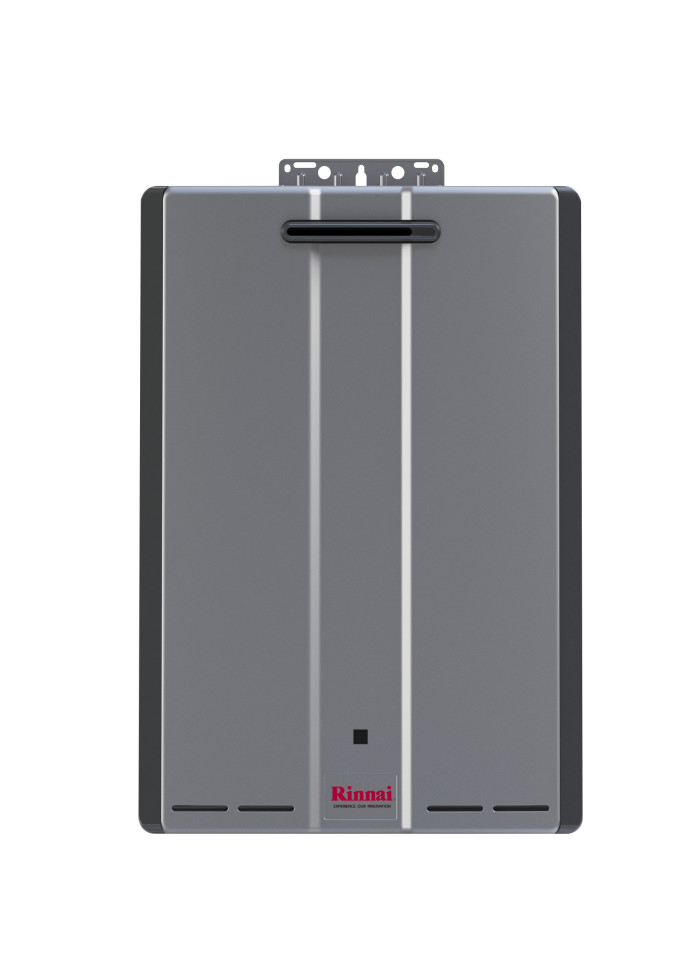
Super High Efficiency Plus Tankless Water HeaterView Brochure |
|---|
| Model Family: RU series |
| Application Type: Whole House |
| Flow Rate: .26 to 9.8GPM |
| UEF (Efficiency): .91-.93 |
| Energy Star Certified: yes |
| Heating Technology: Condensing |
| Location: Indoor |
| Warranty: 15 Year Heat Exchanger and 5 Year Parts |
Manufacturer's Stated Benefits:
|
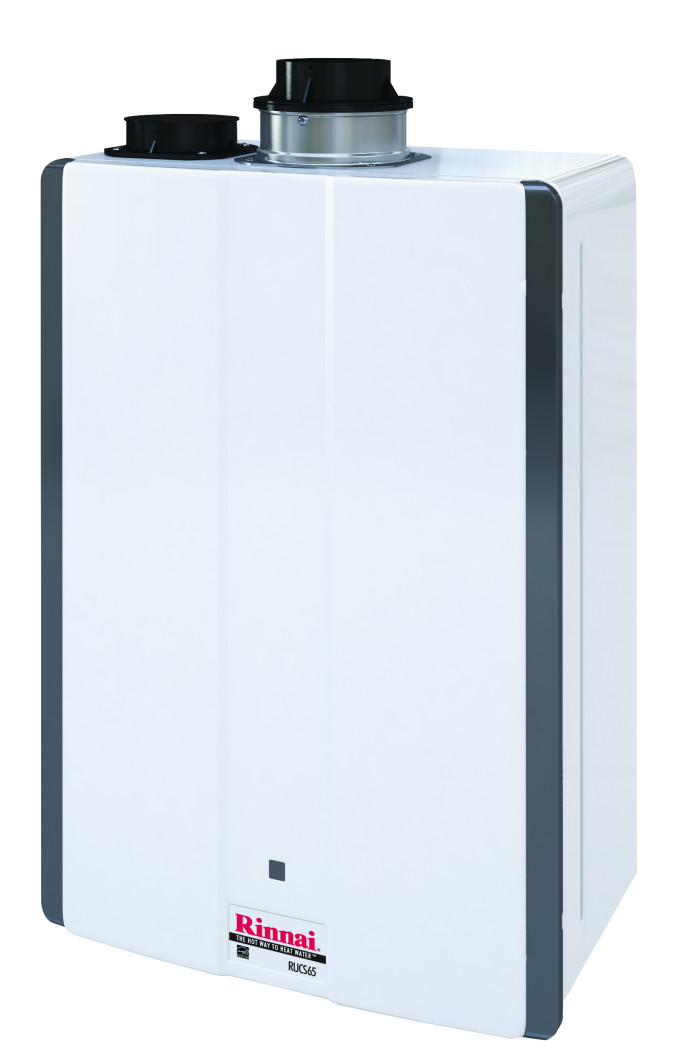
Super Hgh Efficiency (Condensing) Tankless Water HeaterView Brochure |
|---|
| Model Family: RUCS series |
| Application Type: Whole House |
| Flow Rate: .26-7.5GPM |
| UEF (Efficiency): .90 |
| Energy Star Certified: yes |
| Heating Technology: Condensing |
| Location: Indoor |
| Warranty: 12 Years Heat Exchanger and 5 Year Parts |
Manufacturer's Stated Benefits:
|

High Efficiency (Non Condensing) Gas Tankless Water HeaterView Brochure |
|---|
| Model Family: V SERIES |
| Application Type: Whole House |
| Flow Rate: .26-7.5GPM |
| UEF (Efficiency): .81 |
| Energy Star Certified: No |
| Heating Technology: Non-Condensing |
| Location: Indoor |
| Warranty: 10 Year Heat Exchanger-all other parts and components 5 years |
Manufacturer's Stated Benefits:
|
Navien Condensing Gas Tankless Water Heaters

Navien Condensing Tankless Water HeaterView Brochure |
|---|
| Model Family: NPE-A2 |
| Application Type: Whole House |
| Flow Rate: 35°F temp rise 8.4 GPM (31.8 l/m) 45°F temp rise 6.5 GPM (24.6 l/m) 67°F temp rise 4.3 GPM (16.3 l/m) |
| UEF (Efficiency): Up to .95 UEF |
| Energy Star Certified: Energy Star Rated |
| Heating Technology: Condensing |
| Location: Indoor/outdoor |
| Warranty: 5 Year Limited Parts and 15 Year Heat Exchanger Warranty; 1 Year Labor |
Manufacturer's Stated Benefits:
|
Navien Condensing Tankless Water HeaterView Brochure |
|---|
| Model Family: NPE-S2 |
| Application Type: Whole House |
| Flow Rate: 0.5 to 11.2 GPM |
| UEF (Efficiency): Up to .96 UEF |
| Energy Star Certified: Energy Star Rated |
| Heating Technology: Condensing |
| Location: Indoor |
| Warranty: 5 Year Limited Parts and 15 Year Heat Exchanger Warranty; 1 Year Labor |
Manufacturer's Stated Benefits:
|
Navien Non-Condensing Gas Tankless Water Heaters
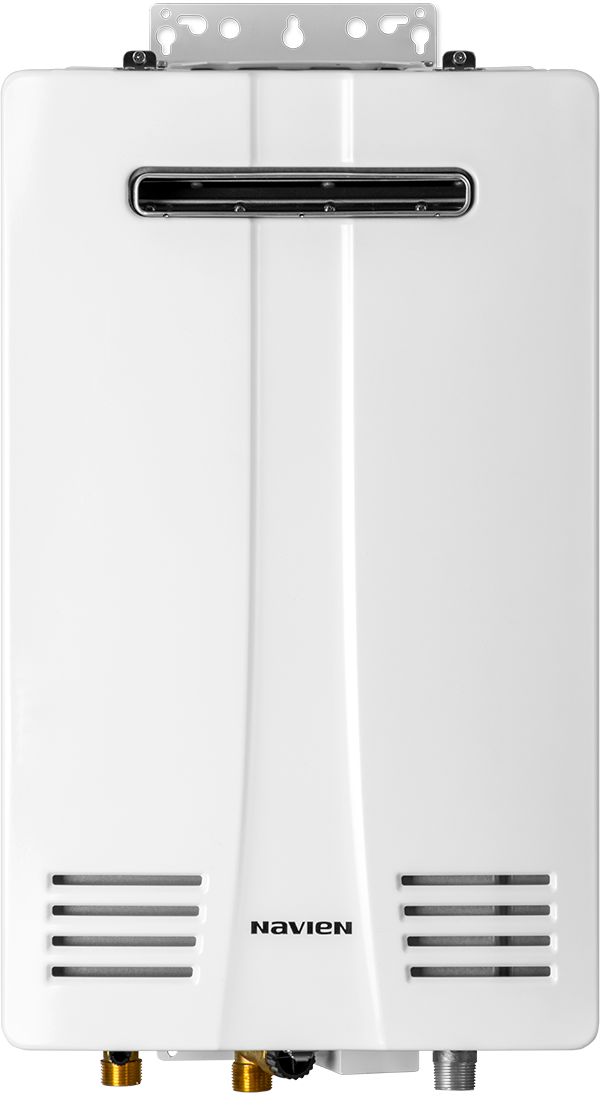
Navien NPN-Exterior Non-Condensing Tankless Water HeaterView Brochure |
|---|
| Model Family: NPN-***E |
| Application Type: Whole House |
| Flow Rate: 0.5 to 9.5 GPM |
| UEF (Efficiency): Up to .81 UEF |
| Energy Star Certified: Energy Star Rated |
| Heating Technology: Non-Condensing |
| Location: Outdoor |
| Warranty: 5 Year Limited Parts and 15 Year Heat Exchanger Warranty |
Manufacturer's Stated Benefits:
|
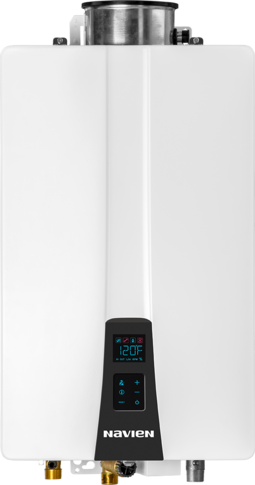
Navien NPN-Universal Premium Universal Non-Condensing Tankless Water HeaterView Brochure |
|---|
| Model Family: NPN-***U |
| Application Type: Whole House |
| Flow Rate: 0.5 to 9.5 GPM |
| UEF (Efficiency): Up to .81 UEF |
| Energy Star Certified: Energy Star Rated |
| Heating Technology: Non-Condensing |
| Location: Indoor/outdoor |
| Warranty: 5 Year Limited Parts and 15 Year Heat Exchanger Warranty |
Manufacturer's Stated Benefits:
|
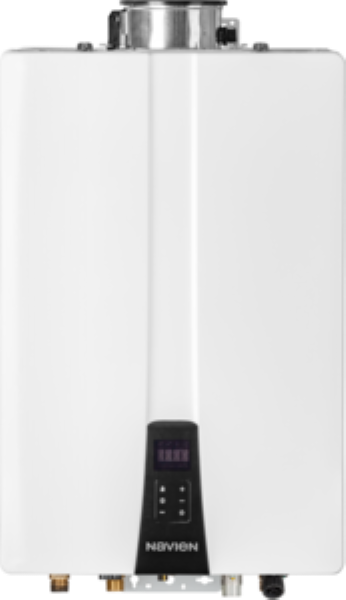
Navien NHW-A non-condensing tankless water heaterView Brochure |
|---|
| Model Family: NHW-AI or NHW-AE |
| Application Type: Whole House |
| Flow Rate: Up to 9.5 GPM |
| UEF (Efficiency): .81 UEF |
| Energy Star Certified: N/A |
| Heating Technology: non-condensing |
| Location: AI- Indoor AE- Outdoor |
| Warranty: 15 year limited warranty on heat exchangers, 5 year limited warranty on parts, and 1 year limited-labor warranty |
Manufacturer's Stated Benefits:
|